




How To Unclog A Floor Drain in The Basement?
A basement floor drain may become slow because lint, dirt, hair, soap residue, sediment, leaves, small debris, or grease has accumulated inside the grate, trap, or connected pipe.
Before using a chemical drain opener, identify whether the problem affects only one floor drain or several fixtures. A single slow drain often points to a local blockage. Water backing up from multiple drains may indicate a larger branch or main-line problem.
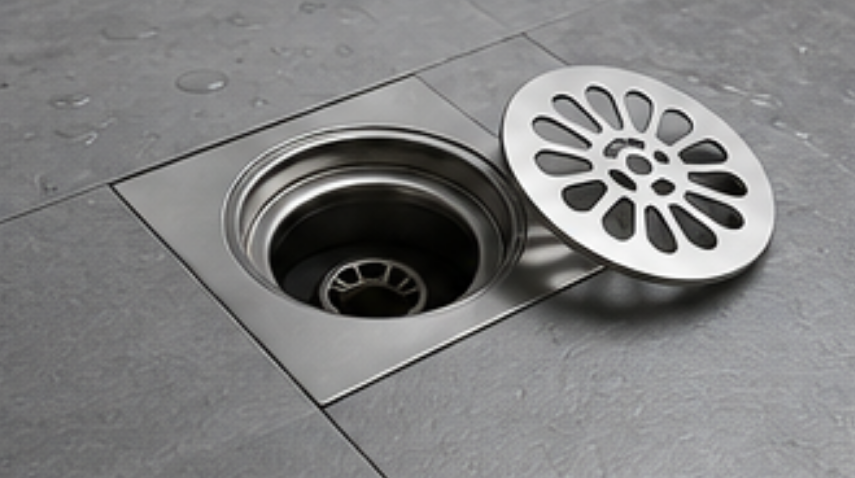
Start by Checking the Drain Area
Remove stored boxes, electrical equipment, cleaning chemicals, and other items from the immediate area.
If wastewater is backing up, wear gloves and avoid direct skin contact. Water connected to a sewer blockage should not be treated as ordinary clean water.
Remove the Grate
Lift or unscrew the floor-drain cover according to its design.
Clear visible material from:
Grate openings
Removable strainer
Anti-odor cup
Drain throat
Shallow trap area
Surrounding floor recess
A large amount of surface debris can restrict flow even when the pipe below remains open.
Determine the Type of Blockage
The way water behaves can help narrow the problem.
| Symptom | Likely Area to Check |
|---|---|
| Water drains slowly but steadily | Partial buildup near the trap |
| Water does not move at all | Dense local clog or downstream blockage |
| Water rises when the washing machine runs | Shared branch or main line |
| Drain gurgles | Airflow, venting, or downstream restriction |
| Sewage backs up during rain | Sewer or stormwater issue |
| Odor remains after cleaning | Dry trap or pipe problem |
Do not continue adding water when it is already rising toward finished walls, equipment, or stored goods.
Try a Plunger
A flat drain plunger can help move a soft blockage near the drain.
Add enough water to cover the plunger edge. Position it securely over the opening and use several controlled strokes.
The goal is to create alternating pressure, not to strike the drain violently.
Seal Nearby Openings When Practical
If the drain includes an accessible cleanout or secondary opening, air leakage can reduce plunging force.
Do not seal or dismantle unknown components without understanding their function.
Use a Manual Drain Snake
When plunging does not restore flow, a manual snake or small hand auger may reach debris inside the trap or branch pipe.
Feed the cable slowly while rotating it. When resistance is reached, work the tool gently rather than forcing it.
Retrieve Debris When Possible
Basement drains often collect solid material that is better removed than pushed farther into the pipe.
After withdrawing the cable, clean the tool and repeat until water begins moving freely.
Stop if the cable becomes stuck, reaches a hard obstruction, or cannot pass the trap.
Flush With Warm Water
After mechanical cleaning, flush the drain with warm water.
Avoid pouring boiling water into an unfamiliar drainage system. Some drains contain plastic pipes, rubber seals, coatings, or joints that may not tolerate extreme temperature.
Warm water can help move loose soap residue and fine dirt without placing the same thermal stress on components.
Should You Use a Chemical Drain Cleaner?
Chemical cleaners may damage finishes, seals, metal parts, or plastic pipes when used incorrectly.
They can also leave a pool of corrosive liquid above a complete blockage.
Use a drain product only when:
The label approves floor-drain use
The pipe material is compatible
The drain is not completely blocked
No other cleaner has already been added
The area can be ventilated
Protective equipment is available
Never mix two drain cleaners or combine them with bleach, acid, ammonia, or vinegar.
Check the Cleanout
Some basement drainage systems include a threaded cleanout plug near the floor drain or farther along the pipe.
A cleanout provides access for professional snaking or camera inspection.
Do not loosen a cleanout when the pipe may be full of backed-up wastewater. Opening it can release water rapidly into the basement.
When the Problem Is Not a Local Clog
Call a plumber or drainage specialist when:
Several fixtures are backing up
Sewage enters the basement
The blockage returns within days
A snake cannot pass
Water rises during heavy rain
The drain pipe appears damaged
Tree roots may be involved
A sump or backwater valve may have failed
A floor-drain grate or anti-odor insert cannot correct a damaged main sewer line.
How Drain Design Affects Maintenance
A Stainless Steel Floor Waste with a removable grate and accessible strainer is easier to clean than a sealed or poorly fitted cover.
For basement and utility-room use, practical design points include:
Strong grate support
Large enough outlet
Removable debris basket
Anti-odor component
Smooth internal surfaces
Corrosion-resistant material
Secure floor connection
Easy access for maintenance
Our Floor Drain Manufacturing Capability
We offer stainless steel floor drains in square, linear, brushed, tile-in, invisible, and anti-odor structures.
Our team can review drain dimensions, outlet diameter, grate pattern, stainless steel grade, surface finish, anti-clogging components, and packaging for wholesalers, developers, and sanitary ware distributors.
Discuss a Basement Floor Drain Order
Send us the installation drawing, floor thickness, outlet size, required flow rate, grate load, material, finish, maintenance structure, packaging, and purchasing volume. We will prepare a Stainless Steel Floor Waste recommendation for your project.
Previous: Where Does A Basement Floor Drain Go?