




How To Fix Electric Heated Towel Rail?
An electric heated towel rail is a bathroom appliance that uses an internal heating element to warm the bars and reduce towel drying time. When it stops working or performs inconsistently, the cause is usually related to power supply, controller settings, wiring connections, or a faulty heating element. A correct fix starts with safe isolation, systematic checks, and deciding whether the issue can be resolved through settings and installation adjustments or whether professional replacement parts are required.
This guide explains practical troubleshooting steps that apply to most electric towel rails and highlights where professional service is recommended. If you are sourcing a durable replacement or planning a new installation, ODO offers options in its electric towel rack range, designed primarily with 304 stainless steel or 304 stainless steel combined with zinc alloy components depending on the model.
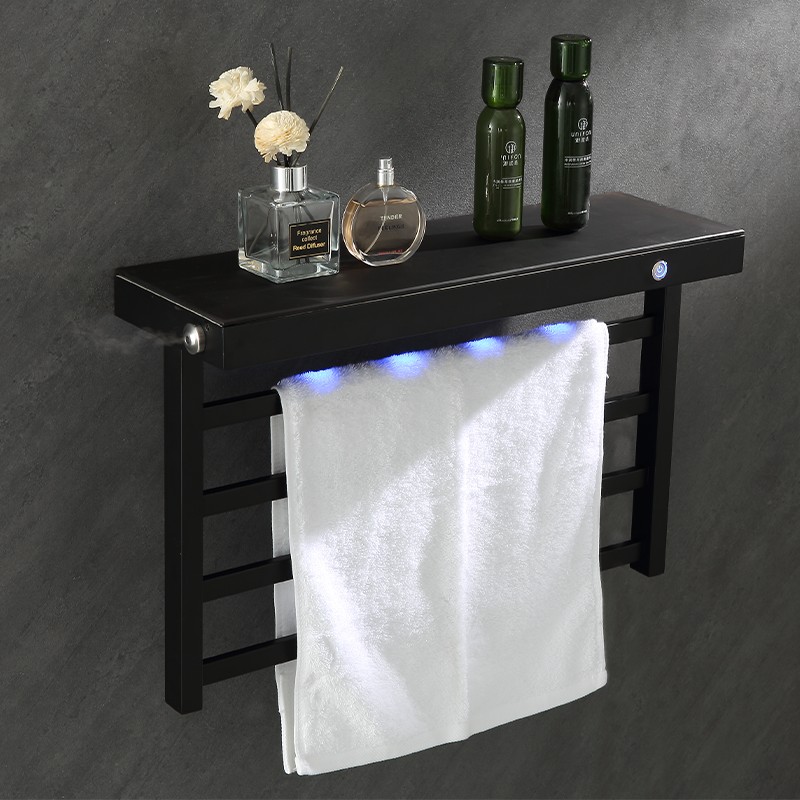
Identify the Symptom First
Start by describing what the towel rail is doing. Most faults fall into a few patterns:
The unit does not turn on at all
The indicator light works but the rail does not heat
The rail heats but not evenly or not hot enough
The unit turns on and off unexpectedly
The controller, timer, or thermostat behaves inconsistently
The breaker trips or a residual current device triggers
Different symptoms point to different causes, so identifying the pattern prevents unnecessary disassembly.
Safety Rules Before Any Checks
Electric towel rails are installed in wet rooms where electrical safety rules are strict. Before touching wiring or removing covers:
Turn off the circuit at the breaker and verify power is off with a tester
Do not open sealed heating components
Do not attempt to bypass grounding or safety devices
If the unit is hardwired and you are not qualified, stop at basic external checks and contact a licensed electrician
If the breaker trips repeatedly or there is visible damage to cables or the unit body, the safest approach is to stop troubleshooting and move directly to professional inspection.
Basic External Checks That Solve Many Problems
Confirm the power supply and outlet condition
If the towel rail plugs into an outlet, test the outlet with another device. If the outlet is controlled by a wall switch, confirm the switch is on. For hardwired units, confirm the correct circuit is enabled and the breaker has not partially tripped.
Check the timer, thermostat, or control mode
Many electric towel rails use timers or thermostatic control. Common user-side issues include:
Timer set to off or operating only within a programmed window
Thermostat set too low to activate heating
Mode switched to standby after power loss
Controller locked or reset needed after a surge event
Power cycling can resolve control glitches. Turn power off for several minutes, then restore power and set the heating mode again.
Inspect for overheating protection activation
Some units include over-temperature protection. If airflow is blocked by heavy towels covering the control end, internal temperature can rise and trigger protection logic. Remove towels, allow cooling, then restart.
Electrical and Installation Checks for Persistent Issues
If basic checks do not solve the problem, the next level involves installation factors that affect heating performance and reliability.
Verify wiring connections and terminal integrity
Loose terminals can cause intermittent heating or complete failure. Symptoms often include:
Unit works sometimes and then stops
Heat output fluctuates
Controller lights flicker during operation
Hardwired systems should be checked by a qualified electrician. The inspection typically focuses on terminal tightness, cable condition, and correct grounding.
Check residual current device behavior
In bathrooms, towel rails are often protected by RCD or GFCI devices. If the device trips, it can indicate:
Moisture intrusion into the electrical connection area
Insulation damage in the cable
Internal component leakage current beyond tolerance
Repeated trips should be treated as an electrical safety issue, not a nuisance. Do not reset repeatedly without identifying the cause.
Performance Problems: Heats but Not Enough
A towel rail that powers on but feels cooler than expected is usually not a failure of the metal or finish. It is often one of these issues:
Incorrect power rating for the bathroom size and ventilation conditions
The unit is controlled by a thermostat that cycles to maintain temperature
Ambient temperature is low and heat loss is higher than normal
Installation on an exterior wall increases heat loss through the wall structure
If the rail is warm but not hot, that can still be normal depending on design and local safety requirements. Many towel rails are designed to provide safe surface temperatures suitable for bathrooms rather than extremely high heat.
When the Heating Element May Be Faulty
If the unit shows power and controls work but the rail stays cold, the heating element or internal thermal fuse may be defective. Typical signs:
Indicator lights show normal operation but no temperature rise
The rail remains cold across all bars rather than partially warm
Resetting controls does not change output
In this situation, replacement rather than repair is often the practical approach, especially for sealed electric towel rails where internal components are not meant to be serviced in the field.
Troubleshooting Summary Table
| Symptom | Likely Cause | First Action | Next Step |
|---|---|---|---|
| No power, no light | Breaker off, outlet dead, wiring issue | Check breaker and outlet | Electrician for wiring inspection |
| Light on, no heat | Mode/timer setting, element issue | Reset controls and power cycle | Service assessment or replacement |
| Heats unevenly | Installation, airflow, partial element fault | Remove towel blockage, confirm mounting | Evaluate unit condition and replace if needed |
| Trips RCD/GFCI | Moisture intrusion, insulation fault | Stop use, inspect visually | Electrician inspection recommended |
| Turns off unexpectedly | Timer schedule, over-temp protection | Check timer and airflow | Verify wiring and controller stability |
This table supports a fast diagnostic approach for homeowners and maintenance teams.
Preventive Practices That Reduce Repeat Failures
Even after fixing a towel rail, good usage and maintenance reduce the chance of recurrence:
Keep the control end clear from heavy towel bunching
Avoid water ingress into control areas during cleaning
If the unit is stainless steel, use non-abrasive cleaning to protect surface finish
If installed in high-humidity environments, ensure correct sealing at cable entry and wall plates
ODO towel racks are produced with 304 stainless steel or 304 stainless steel combined with zinc alloy components depending on the product type, which supports corrosion resistance and stable appearance for bathroom environments. For product options and replacement planning, visit ODO’s electric towel rack range.
When Replacement Is the Better Option
Replacement is typically the more cost-effective choice when:
The heating element is sealed and not serviceable
The unit triggers safety devices repeatedly
The control module is unreliable and resets do not hold
There is visible corrosion at electrical interfaces
The unit is older and downtime cost matters
For renovations or bulk projects, selecting a model with suitable control options and stable materials can reduce long-term service frequency.
Conclusion
Fixing an electric heated towel rail starts with safe power isolation, then systematic checks of power supply, control settings, and airflow. If the unit powers on but does not heat, the issue may be related to wiring connections or an internal heating element fault, and bathroom electrical safety requirements often mean professional inspection is the correct next step. When repair is not practical, replacing with a durable unit built for wet-area use is the most reliable solution.
To review replacement options designed for bathroom environments, explore ODO’s electric towel rack range.