




How To Bleed Heated Towel Rail?
Many people search for how to bleed heated towel rail when they notice uneven heating or a cooler section near the top. In traditional water-based systems, this can happen when air gets trapped inside the rail and blocks proper circulation. But in many modern bathrooms, the situation is different. Not every heated towel rail works on water circulation, and not every model needs bleeding.
Before trying to release air, it is important to understand how the towel rail is built. Many newer installations use electric models instead of hydronic systems. Once you know the difference, the right maintenance approach becomes much clearer.
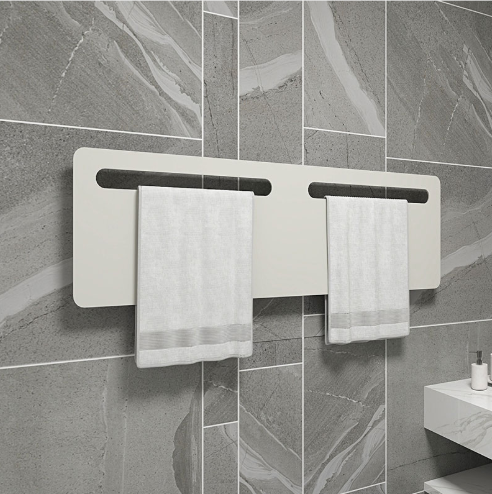
Start By Identifying The Type Of Towel Rail
The first step is always to check whether the towel rail is water-filled or electrically heated. This determines everything that comes next.
In a water-based system, the rail is connected to a boiler or central heating loop. In that case, air can collect inside over time, and bleeding may be required to restore proper heat flow.
In contrast, an electric model works independently. The electric heated towel rail with thermostat uses an internal heating system rather than circulating hot water. It warms up through electric heating elements such as carbon fiber or graphene, combined with thermostat control. In this type of structure, there is no need to release trapped air because there is no circulation system involved.
For buyers and installers, this distinction is important. It avoids unnecessary maintenance steps and reduces confusion during installation or after-sales support.
When Bleeding Actually Applies
Bleeding only makes sense when the towel rail is part of a water-based heating system. Typical signs include uneven heating, slow warm-up, or sections that stay cold while others heat normally.
In those cases, releasing trapped air can help restore circulation. The process is usually simple, but it should be done carefully and only when the system is cooled down.
However, if the rail is an electric model, these symptoms usually point to something else. Trying to bleed an electric towel rail will not solve the issue and may create confusion during troubleshooting.
How electric heated towel rails Work
Electric towel rails are designed for convenience and independent operation. Instead of relying on a central heating system, they generate heat internally and maintain a stable temperature through a thermostat.
The Electric Heated Towel Rail With Thermostat is designed to heat up quickly and reach a stable working temperature within minutes. The temperature is typically controlled within a practical range for towel drying and bathroom comfort, rather than extreme heat output.
Because the system is self-contained, performance depends on factors such as power supply, wiring, timer settings, and thermostat configuration. This is where troubleshooting should focus if the rail is not performing as expected.
What To Check Before Assuming A Fault
If the towel rail does not heat evenly or feels cooler than expected, it is better to go through a few basic checks first.
Make sure the power supply is stable and matches the required voltage. Confirm that the unit is switched on and the timer is active if one is used. Give the rail enough time to reach operating temperature, as electric models warm up gradually rather than instantly.
Installation also plays a role. Wall-mounted units should be installed correctly, with proper wiring and suitable placement in the bathroom. In many cases, performance issues come from setup details rather than product problems.
Maintenance Is Simpler Than Many Expect
For electric towel rails, daily care is straightforward. Regular wiping with a soft cloth helps keep the surface clean, and avoiding harsh cleaning chemicals protects the finish.
This type of maintenance is very different from radiator-style systems. There is no need to deal with air release, pressure adjustment, or plumbing-related work. That is one reason electric models are increasingly used in apartments, hotels, and modern residential projects.
For B-end buyers, this simplicity is important. Products that are easy to maintain reduce after-sales questions and make installation and long-term use more predictable.
Why This Matters For Project Buyers And Distributors
In many projects, heated towel rails are selected not only for comfort, but also for practicality. Buyers want products that save space, improve hygiene, and fit well into modern bathroom layouts.
Electric models with thermostat control are easier to integrate into different environments because they do not rely on existing heating systems. This makes them suitable for residential developments, hotels, gyms, and other commercial spaces.
From a sourcing perspective, working with a supplier that supports OEM and ODM services adds more flexibility. Buyers can adjust size, finish, control options, and installation style to match their market needs instead of relying on fixed designs.
Conclusion
So, how to bleed heated towel rail? The answer depends entirely on the type of rail. If it is part of a water-based system, bleeding may be needed to remove trapped air. If it is an electric model, especially an Electric Heated Towel Rail With Thermostat, bleeding is not required.
In that case, it is more effective to check power, settings, and installation conditions rather than trying to release air.
If you are sourcing heated towel rails for residential or commercial projects, we can support your requirements with practical solutions and OEM or ODM options. Share your project needs or product ideas with us, and we can help you choose a towel rail that is easier to install, easier to maintain, and better suited for long-term use.
Previous: How To Build A Bathroom Niche?