




Where To Place Shower Niche?
A shower niche may look like a small detail, but its position has a direct impact on daily comfort, storage convenience, and the overall visual balance of the bathroom. If the niche is placed too high, bottles become hard to reach. If it is too low, users need to bend every time they shower. If it is installed in the wrong wall, it may interfere with the shower layout or make the space feel less organized.
That is why placement matters more than many people expect. A well-positioned shower niche keeps shampoo, body wash, and other essentials within easy reach while helping the shower area look cleaner and more integrated. In residential bathrooms, this improves daily use. In hotels, apartments, and project bathrooms, it also affects user satisfaction, maintenance efficiency, and how polished the finished space feels.
For distributors, contractors, and project buyers, the niche is not just a decorative recess. It is a practical storage feature that should fit the wall structure, suit user habits, and support efficient installation. The right product still depends on the right placement to deliver value.
Why Placement Matters In Real Use
A shower niche is used every day, often several times. People reach for it while showering, washing hair, shaving, or cleaning. If the niche is placed in an awkward position, it quickly becomes inconvenient. The problem is not usually visible in drawings, but it becomes obvious in daily use.
Good placement improves both reach and organization. Users can access toiletries naturally without stretching too far or blocking the shower flow. At the same time, the niche helps reduce clutter from hanging baskets or corner racks, which is one reason it has become such a popular choice in modern bathrooms.
For project use, this also matters because poor niche placement often leads to small but repeated complaints. The bathroom may still function, but it will not feel well planned. That difference is important in hospitality, apartment, and premium residential work.
The Best Wall For A Shower Niche
In most bathrooms, the best wall for a shower niche is the wall users naturally face or reach toward while showering. It should be convenient without sitting directly in the heaviest water path. A side wall is often a good option because it keeps products easy to reach while avoiding the most direct spray area.
The ideal wall also depends on the plumbing layout. A niche should not conflict with major pipe runs or structural limitations. In many cases, placement works best when it is considered early in the design stage rather than added late in construction.
For horizontal shower niches, wall choice is especially important because the product creates a wider storage line rather than a narrow vertical opening. That wider format can look very clean and modern, but it needs enough wall width to feel balanced.
Height Should Match Daily Reach
Height is one of the most important decisions in shower niche placement. A niche should be easy to use for most adults without forcing them to bend too low or reach too high. It should also allow taller shampoo bottles and shower items to sit comfortably inside.
A good niche height usually follows the natural hand position during shower use. The user should be able to reach bottles quickly and return them without awkward movement. If the niche is too high, it becomes inconvenient. If it is too low, it reduces comfort and may make the wall look poorly proportioned.
In project bathrooms, consistent height matters even more. Standardized placement across multiple rooms helps the final result feel more professional and coordinated.
Keep It Out Of The Main Splash Zone
A shower niche is designed for wet areas, but that does not mean it should always sit in the harshest water impact zone. Constant direct spray can leave more water marks, soap buildup, and cleaning pressure inside the niche. A slightly offset position is often more practical.
This does not mean the niche should be far away from the user. It should still be within easy reach. The goal is to keep products accessible while reducing constant water pooling and heavy residue buildup. That balance improves both convenience and maintenance.
For B-end buyers, this is a useful point because end users care not only about appearance but also about cleaning effort. A niche that stays easier to maintain creates a better long-term impression of the bathroom.
Horizontal Niches Work Well In Modern Layouts
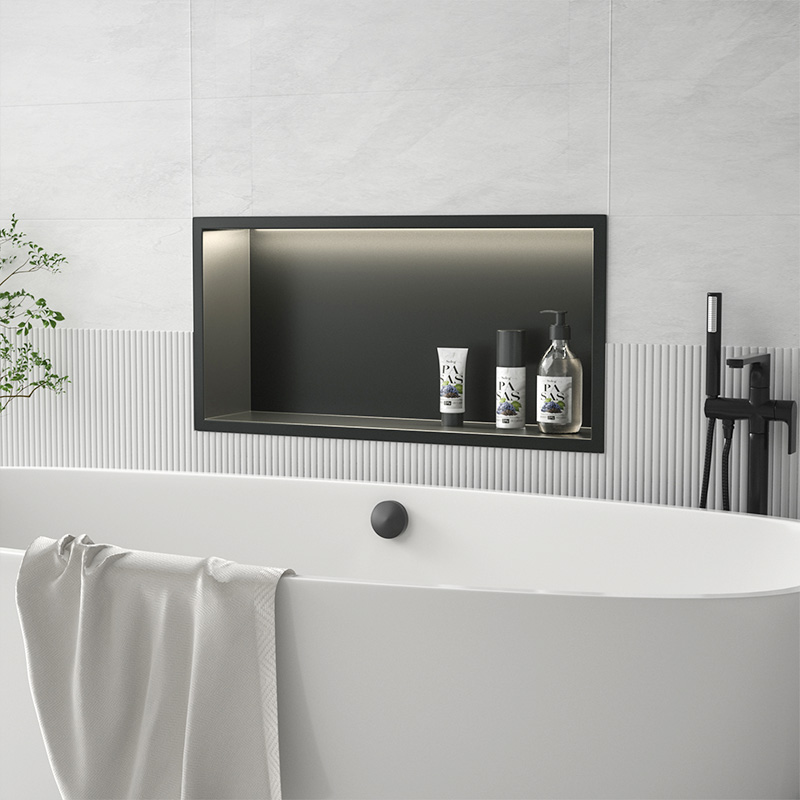
A horizontal shower niche creates a wider storage area and often feels more architectural than a small square niche. It can hold several products in a neat line and usually fits modern bathroom styles very well. This makes it a strong option for projects that want both practical storage and a cleaner wall design.
Because it stretches horizontally, it often works best when aligned carefully with tile lines, fixture heights, or other wall features. Good alignment helps the niche feel built into the wall rather than added as an afterthought. In design-focused bathrooms, this can make a noticeable difference.
For project buyers, horizontal niches are also useful because they can support a more premium bathroom look without requiring many separate accessories. That is part of their value in apartment, hotel, and upgraded residential projects.
Small Bathrooms Need Smarter Placement
In small bathrooms, every wall decision matters. A shower niche should save space rather than make the shower wall feel crowded. The best position is usually one that keeps storage within reach without interrupting movement or making the enclosure feel tighter.
A horizontal niche can work very well in this kind of bathroom if the wall has enough width. It reduces the need for hanging baskets, shelves, or corner racks, which helps the shower area feel cleaner and less cluttered. That space-saving effect is one reason recessed niches are so popular in compact layouts.
For wholesalers and project buyers, this makes the product easier to position in markets where apartment bathrooms are getting smaller but user expectations are getting higher.
Large Bathrooms Still Need Practical Access
In larger showers, the risk is often placing the niche too far from where people actually stand. A bigger shower can look impressive, but if the user has to step away from the water flow to reach basic items, the storage is not truly convenient.
The better approach is to match niche placement with real shower use patterns. The location should feel natural during normal movement. In some larger layouts, this may even mean using more than one storage point, depending on how the shower area is designed.
This is relevant in premium residential and hospitality settings, where comfort and flow matter as much as appearance. A well-placed niche supports both.
Visual Balance Should Not Be Ignored
A shower niche is a functional product, but it is also part of the bathroom design. If it is placed without considering the overall wall composition, the shower area can feel visually off. This is especially true with horizontal niches, since their width makes them more noticeable.
The niche should relate well to the shower fittings, tile layout, and overall proportions of the wall. When placed thoughtfully, it adds order and structure. When placed randomly, it can weaken the visual quality of the entire shower space.
For B-end customers, this design value matters because bathroom products are judged quickly by photos, first impressions, and finished project results. A niche that looks well integrated helps the whole bathroom feel more complete.
Common Placement Mistakes
One common mistake is placing the niche too high just to avoid pipework or simplify wall layout. Another is installing it too low without thinking about comfort. A third is putting it directly in the strongest spray area, which can increase water marks and cleaning effort.
There is also the issue of poor alignment. If the niche does not work with the tile layout or fixture height, the finished wall can feel less refined. In projects, these details affect how the space is perceived after completion.
For contractors and buyers, avoiding these mistakes is part of getting better product value. A niche is simple in concept, but the final experience depends heavily on where it is placed.
Why Placement Matters For B-End Buyers
For B-end buyers, a shower niche is not only a storage feature. It is also part of the bathroom solution. Placement affects user comfort, cleaning convenience, project consistency, and the finished visual standard. That means it influences both satisfaction and after-sales feedback.
Buyers usually want products that are easy to integrate, practical across different bathroom types, and suitable for OEM/ODM or project-based requirements. A horizontal shower niche can meet these needs well when the placement is planned properly from the start.
This is especially important in multi-unit projects, where small design mistakes can repeat across many bathrooms. Good placement helps reduce those risks and improves the final impression of the whole installation.
Conclusion
The best place to put a shower niche is on a wall that is easy to reach during shower use, at a comfortable height, and outside the strongest direct spray area. The right placement improves convenience, keeps the shower wall more organized, and helps the bathroom look cleaner and more intentional.
For horizontal shower niches, placement matters even more because the wider shape becomes part of both storage planning and visual design. When positioned well, it adds real value to the bathroom rather than acting as a simple recessed shelf.
If you are selecting horizontal shower niches for residential, apartment, hotel, or project supply and need help with size matching, layout planning, or product selection, feel free to contact us. We can provide practical guidance and help you choose a solution that fits both the wall structure and the needs of your market.
Previous: How To Build A Shower Niche?